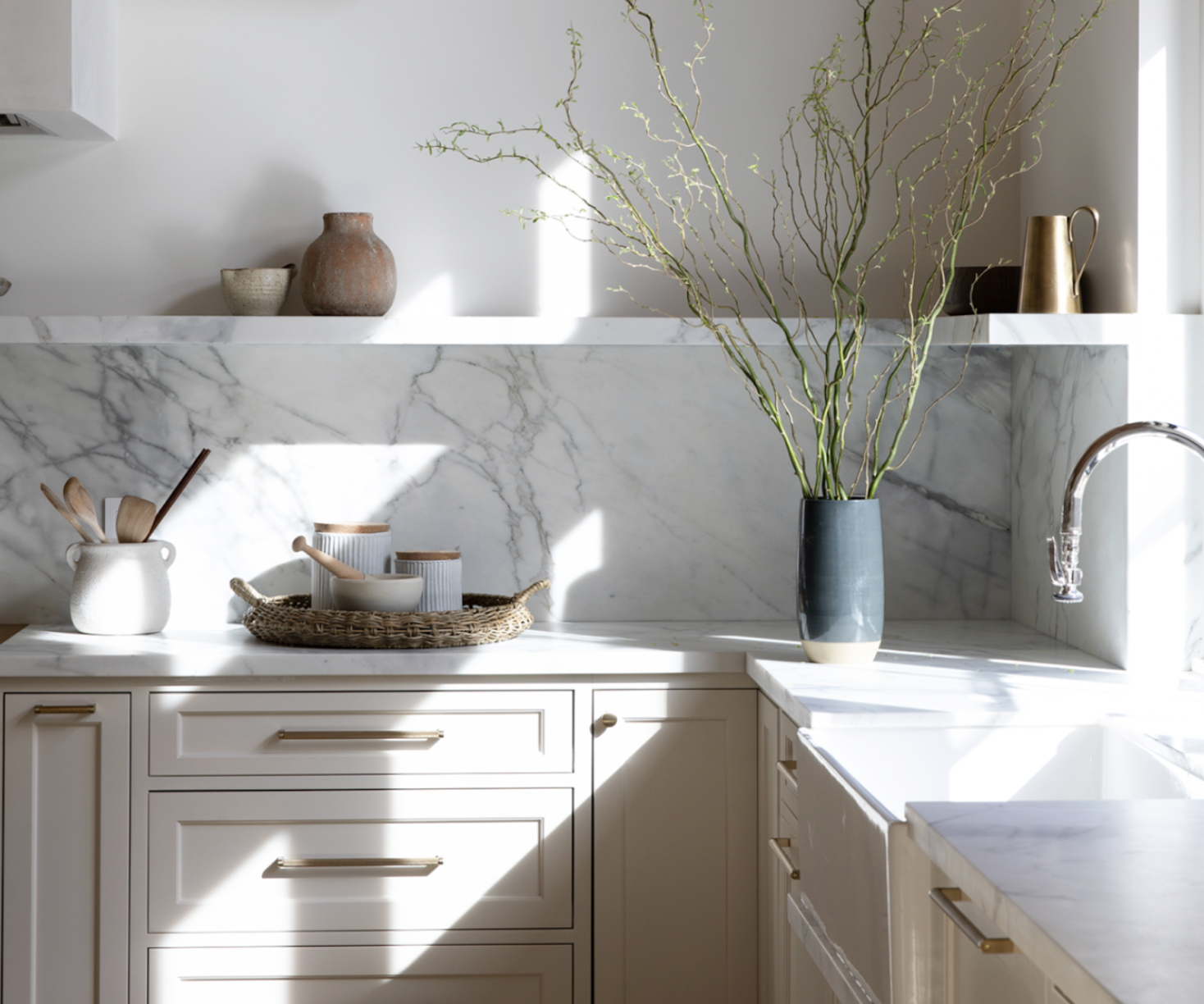
February 12, 2026 • Posted by Design Bay Area
How a Sonoma County panel is rethinking sustainability, one material at a time: Presented by IRG Stone for Design Healdsburg
This event took place October 4th, 2025 during Design Healdsburg. The following is a recap of the event.
It’s not even noon on Day 2 of Design Healdsburg, but the atmosphere already hums with energy. It’s a perfect autumn day, one of many during this annual design retreat, and guests settle into rows of chairs, wine glasses in hand.
“This is going to be a good day,” promises host Jogreet of IRG Stone, the family-owned stone company her father started more than 30 years ago. She introduces moderator Mary Jo Bowling, Homes Editor at Luxe Interiors + Design, to lead a conversation on what “sustainability” in luxury design really means—beyond the buzzword.
On stage with Bowling are four designers who live and work in and around Sonoma County, all of them deeply shaped by the California landscape:
- Emily Mughannam, principal of Fletcher Rhodes
- Austin Carrier and Alex Mutter-Rottmayer, partners in life and in their firm HommeBoys
- Katie Monkhouse of Katie Monkhouse Interiors
- Moderated by: Mary Jo Bowling, Homes Editor at Luxe Interiors + Design
During an hour-long discussion, they’ll peel back the layers of marketing speak and talk honestly about waste, client expectations, material choices—and why they’ll die on the hill of natural stone.
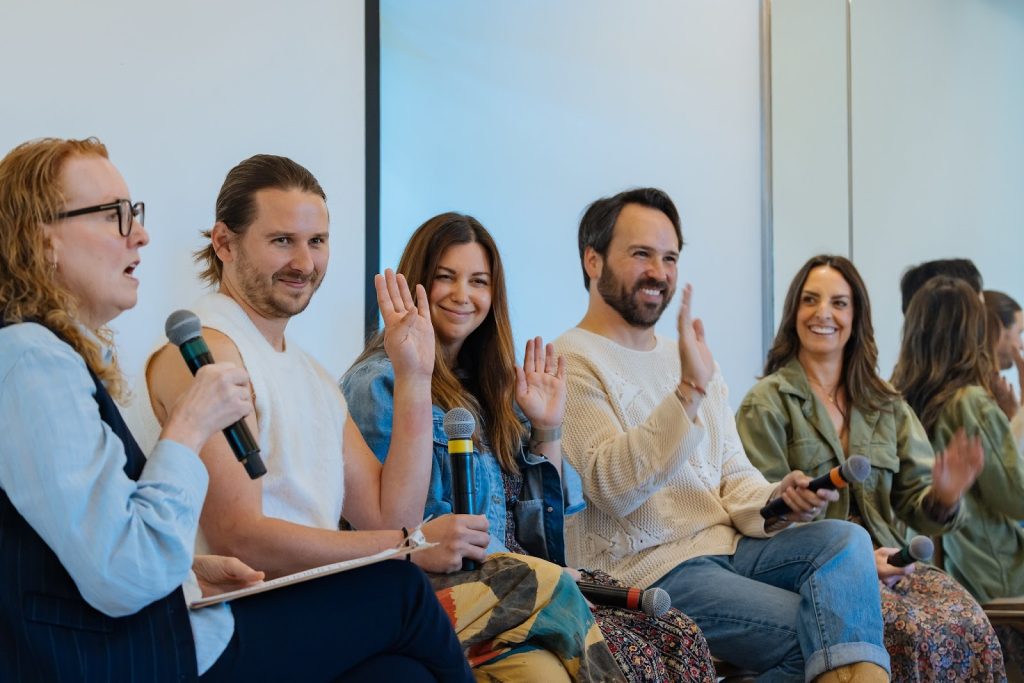
The Material Shift Panelists: Mary Jo Bowling (Luxe Interiors + Design), Alex Mutter-Rottmayer (HommeBoys), Katie Monkhouse (Katie Monkhouse Interiors), Austin Carrier (HommeBoys), Emily Mughannam (Fletcher Rhodes)
Wine Country as Muse
All four designers trace their point of view back to a sense of place. Mughannam moved from San Francisco to Sonoma County more than a decade ago and quickly embraced “wine country living”. It’s not just branding her professional life: it’s how she works.
“The environment here is such a mirror of indoor/outdoor life,” she explains. “I’m very emotionally affected by my spaces. The beauty of this area—year-round—gets baked into everything I design.”
For Carrier and Mutter-Rottmayer, HommeBoys is a mash-up of geographies: Alex grew up in Marin, steeped in California light and landscape; Austin is from Memphis, bringing “funk, soul, and a little rock and roll” into the mix. Their work is contemporary and playful but always grounded in honest materials.
“Our ethos is rooted in materiality and real materials,” says Carrier. “Sonoma County breeds that. Everything around you is nature.”
Monkhouse, an East Coaster who landed in San Francisco sight-un-seen 15 years ago, describes the region’s impact more like a love affair. Weekend trips up the coast, hikes in Marin, the soft light in the shoulder seasons—“It gets into your soul,” she says. “I look around sometimes and think, ‘I can’t believe I live here.’”
That sense of place and of privilege in living so close to such raw beauty, underpins how each of them defines sustainability.
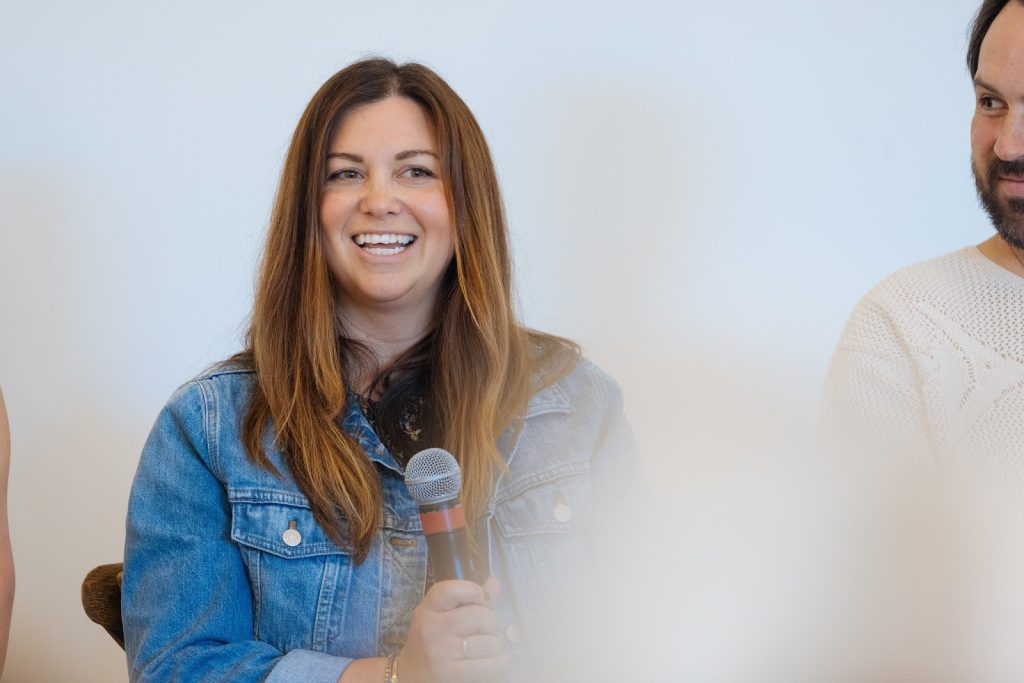
Katie Monkhouse of Katie Monkhouse Interiors
Sustainability, Minus the Slogan
None of the designers on stage particularly loves the word sustainability. It’s been marketed into oblivion, they agree, especially in the luxury space. But when Bowling asks each of them to define it on their own terms, a clear pattern emerges: longevity over novelty.
Mughannam starts with time.
“I design classic, timeless spaces,” she says. “I want them to look good in five, 10, 20 years.” That means durable finishes and natural materials—hardwood floors, stone, surfaces that can be lived with and lived on. It also means resisting the instinct to gut every project.
“Sometimes a client says, ‘I want to rip this kitchen out and start over.’ Maybe not,” she says. “Maybe we keep the cabinetry, rework it, get creative with what’s already there.”
For HommeBoys, sustainability is “new heirloom” thinking: no fast furniture, no box-store pieces destined for the curb in five years.
“We want pieces that will outlast the house,” says Mutter-Rottmayer. “If you’re building or furnishing a home, there’s going to be waste—that’s the elephant in the room. Our job is to make sure you’re not dumping it all and redoing it in a decade.”
Their own furniture line was literally born from leftovers: siding offcuts, extra oak flooring, materials that would otherwise be discarded. They turned them into sculptural pieces, then scaled production carefully—still made entirely in Sonoma County, often in local red cedar, and avoiding exotic, hard-to-trace woods.
Monkhouse approaches it with a simple filter: local whenever possible. For her own remodel, that meant remnants of natural stone, handmade tile from regional makers, vintage finds revived with leftover fabrics—and a deep relationship with Facebook Marketplace.
“I can’t guarantee every single item is perfectly green,” she says. “But I can make sure it didn’t travel halfway around the world, that it keeps craftspeople in business, and that we use every last scrap.”
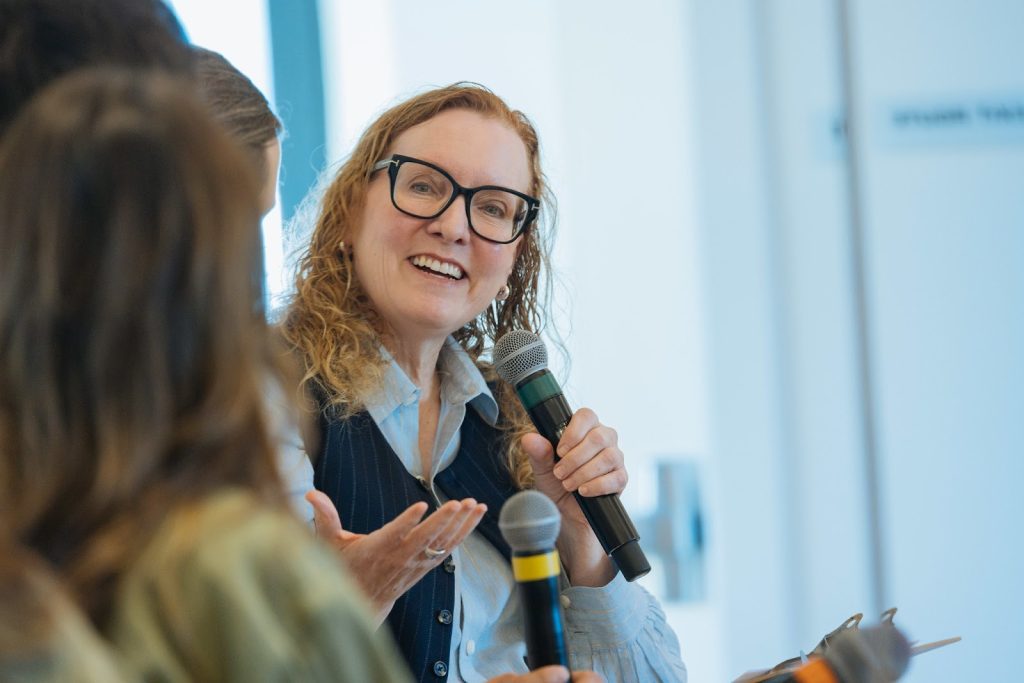
Mary Jo Bowling, Homes Editor at Luxe Interiors + Design
Patina, Not Perfection
One of the liveliest threads of the conversation is about patina—those wine rings on stone counters, scuffs on oiled floors, the softened edges of a house that’s lived in.
Many clients, conditioned by Instagram and “forever finishes,” resist this. They want kitchens and bathrooms that look pristine forever.
“We tell them, ‘You picked the wrong designers,’” jokes Carrier.
HommeBoys specify oiled hardwood floors precisely because they mark and mellow. Before a recent install, they warned their clients that the first stains would hurt. “In the first couple months, every spill is going to feel catastrophic,” they said. “Give it time.” Now the same clients love how the floor looks as it wears in, not out.
Mughannam takes a similar stance. “We kind of don’t give them a choice,” she says, laughing. “You can see that the material is going to age. You’re going to deal with it. And you’re going to love it.” Years later, no one has called to complain about an olive-brined martini stain.
For Monkhouse, patina is non-negotiable. “Natural materials never compromise the look,” she says. “If anything, they add soul. You might be compromising the timeline or budget, but never the aesthetics.”
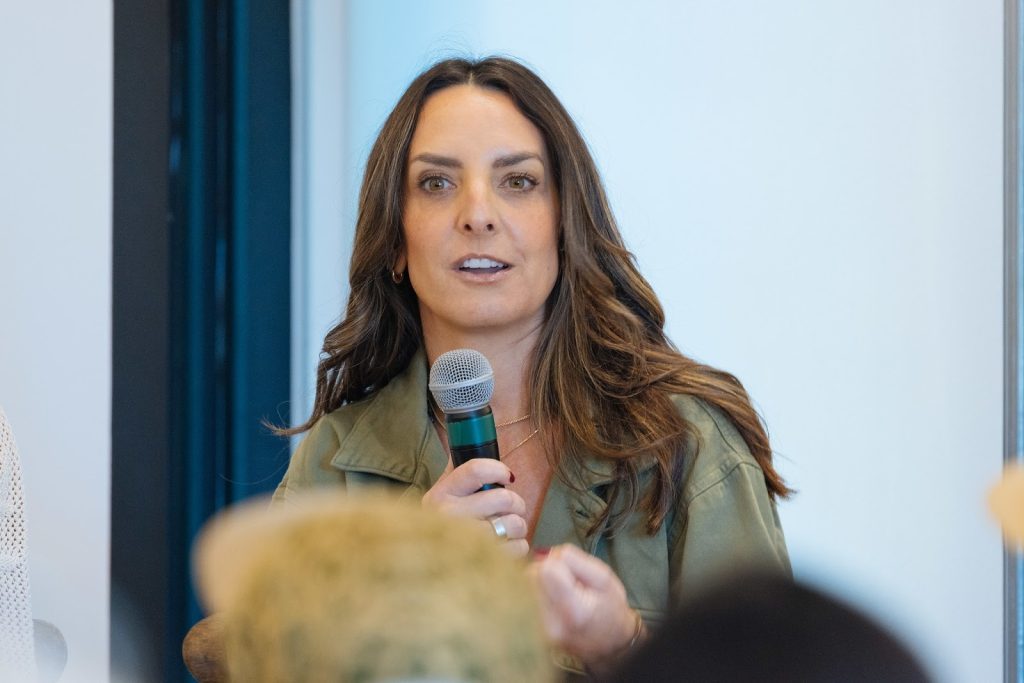
Emily Mughannam, principal of Fletcher Rhodes
Keeping Materials in Circulation
The designers are equally passionate about what not to send to landfill.
Monkhouse admits she has “a genuine fear” of things ending up in the dump. On flip houses where clients want to erase everything, she advocates for careful deinstallation and donation to organizations like Make It Home Bay Area, which furnishes homes for people transitioning out of crisis.
“It’s a more delicate operation than a couple guys with sledgehammers,” she notes. “It costs more and it affects the timeline. But you can get a tax benefit, and more importantly, the materials get another life.”
Mughannam sees remodels as creative puzzles: How do you reuse ‘90s cabinets? How do you give existing pieces new purpose? She used to keep a warehouse of salvaged furnishings to rotate into future projects; these days, she’s just as likely to set old windows or beams on the curb. In wine country, she says, “You put something on the side of the road and someone building a greenhouse will have it gone in an hour.”
Innovation Meets Craft
Not every sustainable move is about reuse. Some of the most exciting shifts are coming from material innovation.
Carrier and Mutter-Rottmayer are big advocates of thermally modified woods—common species like pine, ash, and cedar treated to become more durable, more stable, and in some cases more fire-resistant, a critical factor in Sonoma County. They mention companies like Delta Millworks, Thermory, and Re-sawn Timber – all are pushing this space forward.
Monkhouse spotlights Supernatural, a drywall mud created by her friend Alicia that actually sequesters CO₂ from the air over its lifetime. It goes on more smoothly, resists cracking and mildew, and is priced comparably to conventional mud.
“It’s like planting trees in your walls,” Monkhouse says. “The building itself becomes a carbon sink.”
On the softer side, HommeBoys are enamored with mohair upholstery from North Carolina-based JB Martin—natural, hard-wearing, and far more breathable than polyester blends. They’re also eyeing next-generation “mushroom leather” made from mycelium, used in recent collaborations with luxury fashion houses and now available for interiors.
“Some of these experimental products aren’t there yet,” says Carrier. “But a few are genuinely amazing—and they let clients avoid animal leather without going full plastic.”
What They Won’t Use
Asked about the “baddies,” the panel doesn’t hesitate.
Top of the list: Scotchgard and similar chemical fabric treatments.
“We run into this all the time,” says Carrier. “Clients want to protect an expensive sofa, so they spray it with something that off-gasses and ruins the hand of the fabric. You end up with a weird-smelling, crunchy linen that still stains—and you’ve added more toxins to the room.”
Also on the no-go list: plastic decking marketed as eco-friendly and lawns that are “no-mow” but all synthetic. They may last, but when tastes change, those materials are nearly impossible to recycle and will sit in landfills for centuries.
And then there’s the quartz elephant in the room. While the event’s hosting brand is IRG Stone, the panel doesn’t mince words.
“We always pick natural stone,” says Mutter-Rottmayer. “We actually refuse to specify engineered stone. If that’s a dealbreaker, clients can find another designer.”
Instead, they tailor stone choices to function: softer marbles in bathrooms and powder rooms; indestructible quartzites and certain granites in hardworking kitchens. Fusion Quartzite—a favorite they use in their own home—gets a special shout-out for being “literally impenetrable.”
The real compromise, they argue, isn’t aesthetic; it’s financial. Natural materials and higher-performance systems add more upfront costs.. California’s green building codes are pushing the industry in the right direction but also raising baseline expenses.
“To be more sustainable often means spending more,” says Mutter-Rottmayer. “So the temptation is to go cheap and synthetic. That’s where we try to hold the line.”
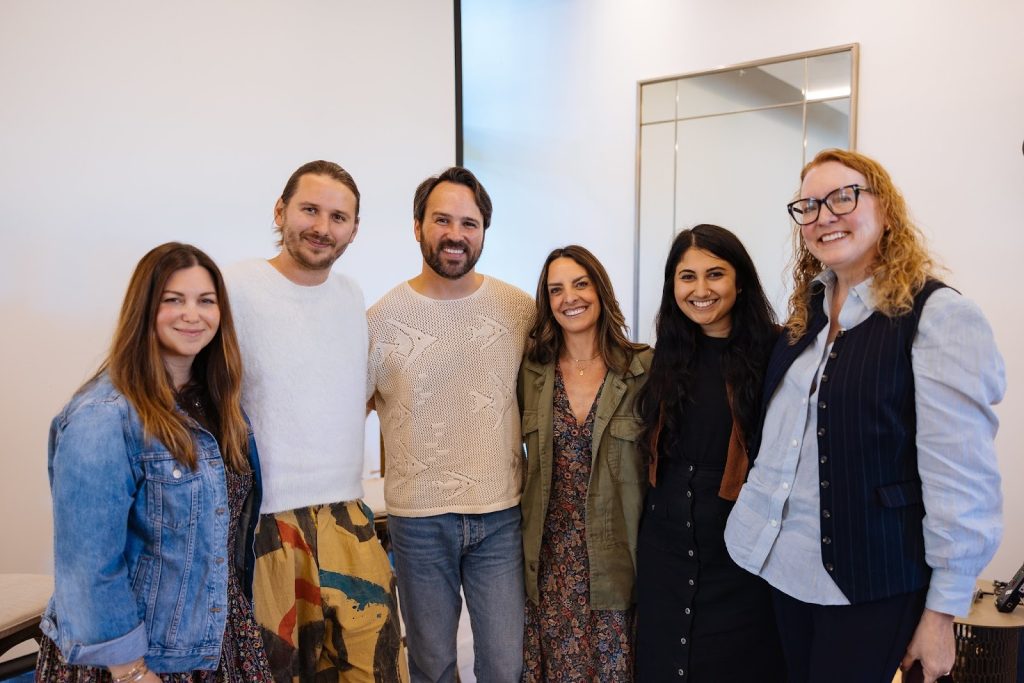
The Material Shift Panelists with IRG Stone’s Jogreet Chadha
Education as Climate Action
If there’s a throughline to the discussion, it’s the role of designers as gatekeepers.
Audience member and author Lisa Staprans, whose work explores neuroscience, wellness, and design, calls them out as leaders: “If someone can afford a beautiful home, you are their gatekeepers. They don’t know what they don’t know.”
The panel agrees.
“At the beginning of a project there’s a lot of hand-holding,” says Mughannam. “It can be tiring, but halfway through, you realize they’ve stopped questioning you. They trust the process. They understand why we’re making the choices we’re making.”
HommeBoys send clients fabric swatches and invite them to do “the mustard test”—spill, smear, and stain to see how wool and mohair actually perform. Once they’ve lived with samples, many clients are willing to invest in better materials and accept the patina that comes with them.
Monkhouse talks candidly with clients about fewer, better things, borrowing the mantra from fashion brand Cuyana. She’d rather leave a wall empty than fill it with a placeholder piece destined for donation or the dump.
“I have kids,” she says. “The idea of us all being buried under a landfill of stuff we bought and tossed—that keeps me up at night.”
And What About AI?
In a late-session curveball, a member of the audience asks about artificial intelligence and how it squares with their values.
The short answer: they’re cautious.
Mughannam and Monkhouse both admit to using AI tools to help answer complicated emails—“Make this more professional” is a common prompt—but say experiments with AI image generation for design concepts have mostly fallen flat.
“It actually makes things worse,” says Mughannam. “You show clients something that isn’t real and isn’t quite right.”
Carrier worries about the environmental cost of endless digital iteration. “You spend all this time prompting it, and you’re like, ‘Did I just use a village’s worth of water for a stupid ceiling pattern?’”
Monkhouse’s take is pragmatic: AI isn’t going anywhere, so the responsibility is to use it sparingly and intentionally—like any other resource.
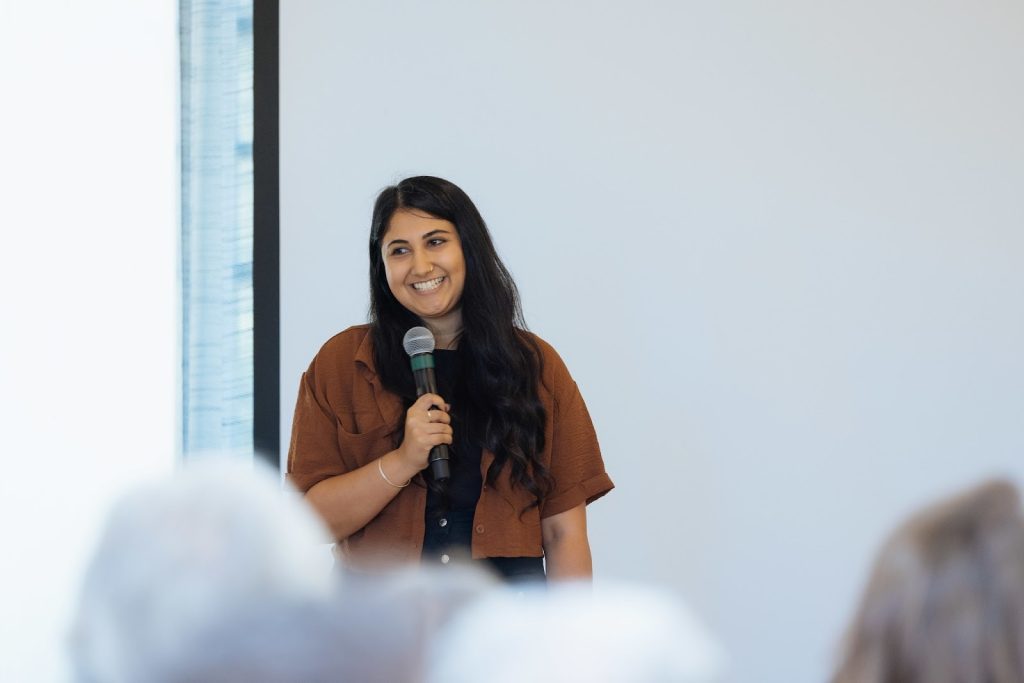
Jogreet Chadha, IRG Stone
Designing From the Land, For the Future
As the session winds down, Jogreet returns to the mic to thank the panel and invite guests to refill their glasses and continue the conversation among these colleagues and new friends. Outside, the late-morning light washes over rows of stone, vineyards, and the hills beyond—an almost-too-perfect backdrop for a discussion about designing in partnership with the land.
If there’s a single message that lingers, it’s this: sustainability in luxury design isn’t about chasing the newest “eco” product or stamping a green label on the same old choices. It’s about building and furnishing with less, but better—with materials that last, age, and tell the story of the people who live with them.
In Sonoma County at least, that story starts with the ground beneath their feet.
Thank you to our vibrant community who gathered for this event! Design Healdsburg 2026 will take place October 2–4th.
About the Event
The Material Shift: Sustainability Trends
The Material Shift: Sustainability Trends event took place on Saturday, October 4th, 2025 as a collab between Design Bay Area and IRG Stone, during Design Healdsburg. Designers and architects are rethinking the materials that shape our built environment, driven by a growing demand for sustainable and low-impact choices. This conversation explores how the industry is embracing circularity, reducing environmental harm, and balancing aesthetics with responsibility. From innovative surfaces to new approaches in reuse and lifecycle planning, panelists will share how sustainable materials are reshaping design practice and influencing client priorities.

Credits:
Surface: IRG Stone
Event Photos: Rob Villanueva rvsf.co
Header Photo: Bess Friday / Construction: Reliez Builders Valley Builders
Design Healdsburg Producer: Design Bay Area